0


Your Cart


Product title goes here
$19.95
Thank you! Your submission has been received!
Oops! Something went wrong while submitting the form.
No items found.
Setsubun (節分) is a Japanese tradition that marks a seasonal turning point as winter begins to give way to spring. More than a calendar date, it offers a moment to pause, clear space, and gently welcome what comes next. This reflection explores how that sensibility connects to ikebana practice and everyday life.
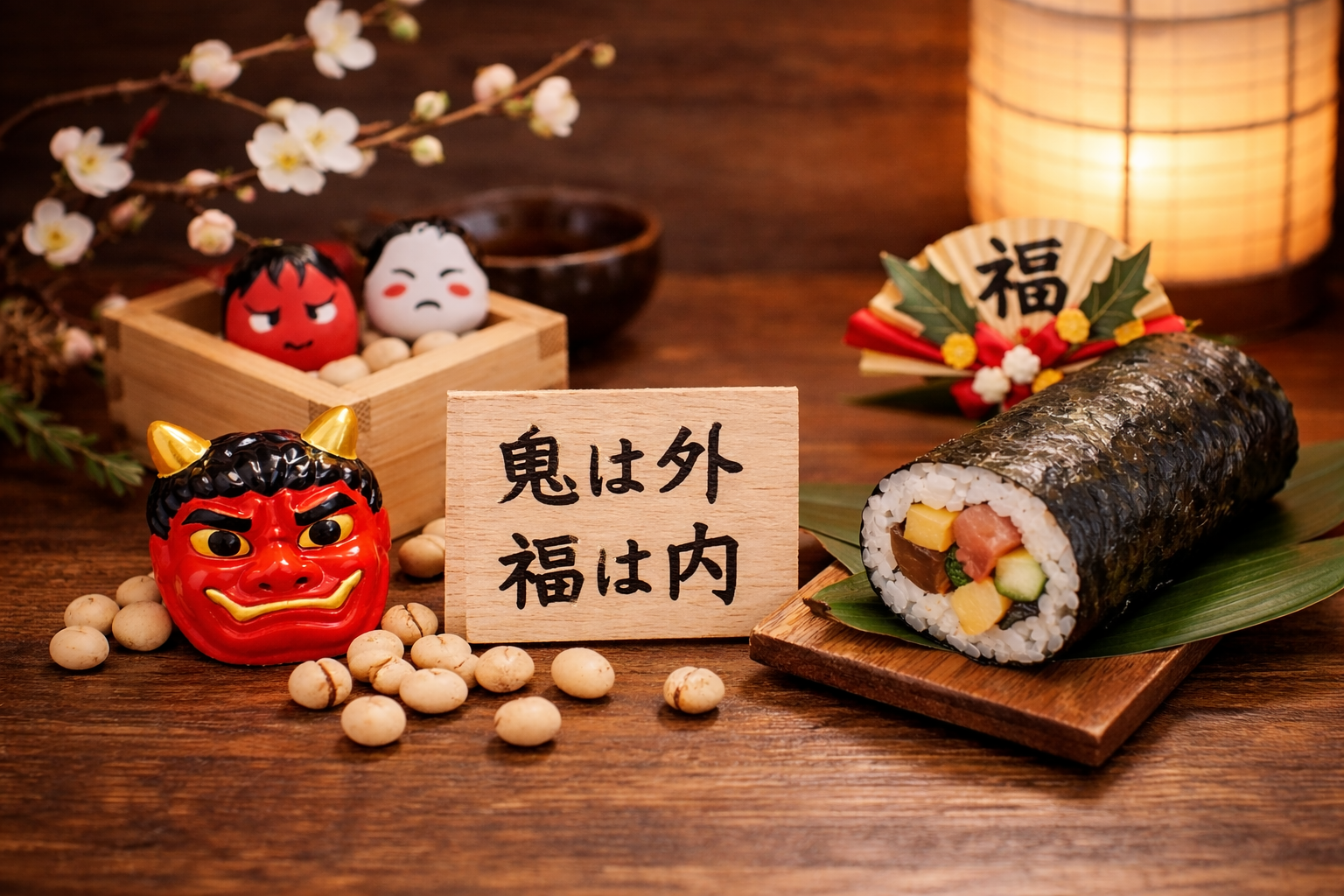
In early February, Japan observes Setsubun (節分), a traditional marker of seasonal change. While it is often described as the beginning of spring, Setsubun is less about the calendar and more about transition. It recognizes the moment between what has been and what is about to arrive.
One of the best-known customs of Setsubun is mamemaki, the ritual of throwing roasted soybeans while calling out, “Oni wa soto! Fuku wa uchi!” Out with misfortune. In with good fortune. It is playful, often noisy, and usually shared with family. But beneath the surface, it carries a quieter meaning.
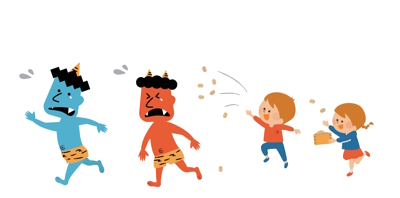
Setsubun is not about erasing the past. It is about clearing space.
In ikebana, this idea is deeply familiar. Before arranging begins, we remove what is unnecessary. Extra leaves are trimmed. Crowded lines are simplified. Space is created not to diminish the materials, but to allow them to breathe. What remains is more visible, more intentional, and more alive.
Seasonal traditions like Setsubun reflect that same sensibility. They remind us that change does not always require dramatic action. Sometimes it begins with a small act of release. Stepping away. Letting go. Making room.
This can apply far beyond the practice of ikebana. There are moments in life when a place, a routine, or even a way of thinking feels heavy. Setsubun offers quiet permission to acknowledge that weight and to choose gentleness instead. Not to rush forward, and not to forget, but simply to create space for what comes next.
As winter begins to loosen its hold, Setsubun invites us to pause at the threshold. To notice the shift in light. To recognize the value of restraint. To remember that new growth often begins with subtraction, not addition.
At Central Ohio Ohara, we value these moments of seasonal awareness. They remind us that ikebana is not only something we make, but something we practice in how we observe, how we wait, and how we allow change to unfold.
Joe Rotella
Associate Second Term Master
Ohara School of Ikebana