0


Your Cart


Product title goes here
$19.95
Thank you! Your submission has been received!
Oops! Something went wrong while submitting the form.
No items found.
Ohara School certificates serve a broad purpose by marking readiness, preserving continuity of study, and connecting students to a shared curriculum. This article explores what Ohara certificates represent, why students pursue them, and how the process works.
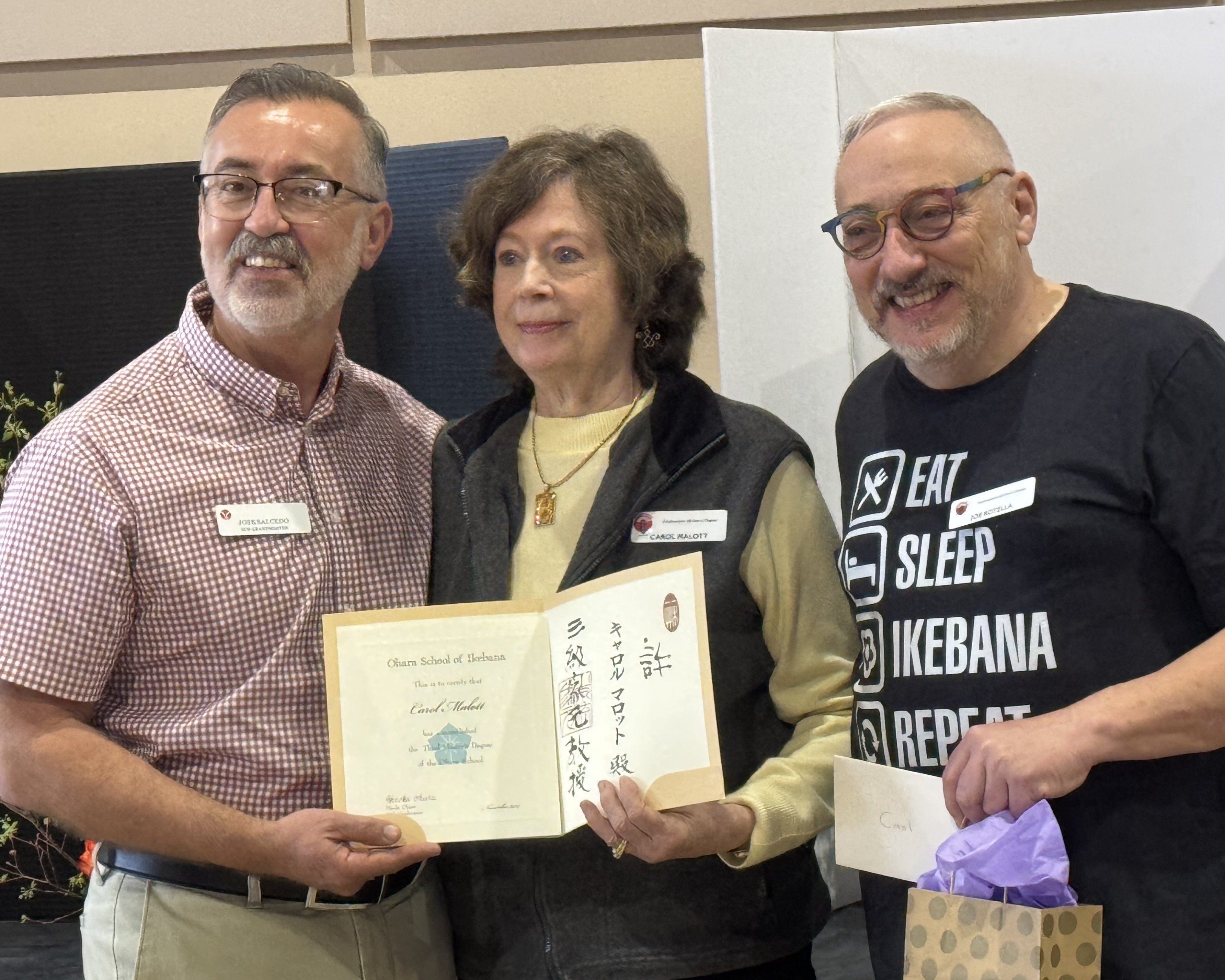
Certificates acknowledge readiness for the next stage of study rather than an endpoint.
Students often ask whether certificates in the Ohara School of Ikebana really matter. Some ask early in their study. Others wonder quietly after years of practice.
It is a reasonable question.
Ikebana is a long-term practice. Progress is gradual. Understanding deepens over time. Because of this, the role of certificates is not always obvious, especially to students who are focused on learning rather than advancing quickly.
So what do certificates actually represent in the Ohara School?
In the Ohara School, certificates are not awards for being “good” at ikebana. They are not prizes for speed, talent, or ambition.
A certificate acknowledges readiness.
It reflects a shared understanding between the student, the sensei, and the school that certain foundational ideas have been studied and absorbed. These include proportion, line, spatial awareness, form, and the relationship between materials and container.
Certificates recognize sustained study and understanding. They do not claim mastery.
One of the defining characteristics of the Ohara School is its structured curriculum. This structure exists to support learning, not to restrict creativity.
When a student earns a certificate, their progress is formally recorded with Ohara Headquarters in Japan. That level of study is then understood by other Ohara teachers worldwide.
This creates continuity.
If a student studies in a different city, attends a seminar, or resumes lessons after a break, their certificate provides a shared reference point. Teachers know what has been studied and what concepts should already be familiar.
This consistency helps preserve the integrity of the school’s teaching across countries and generations.
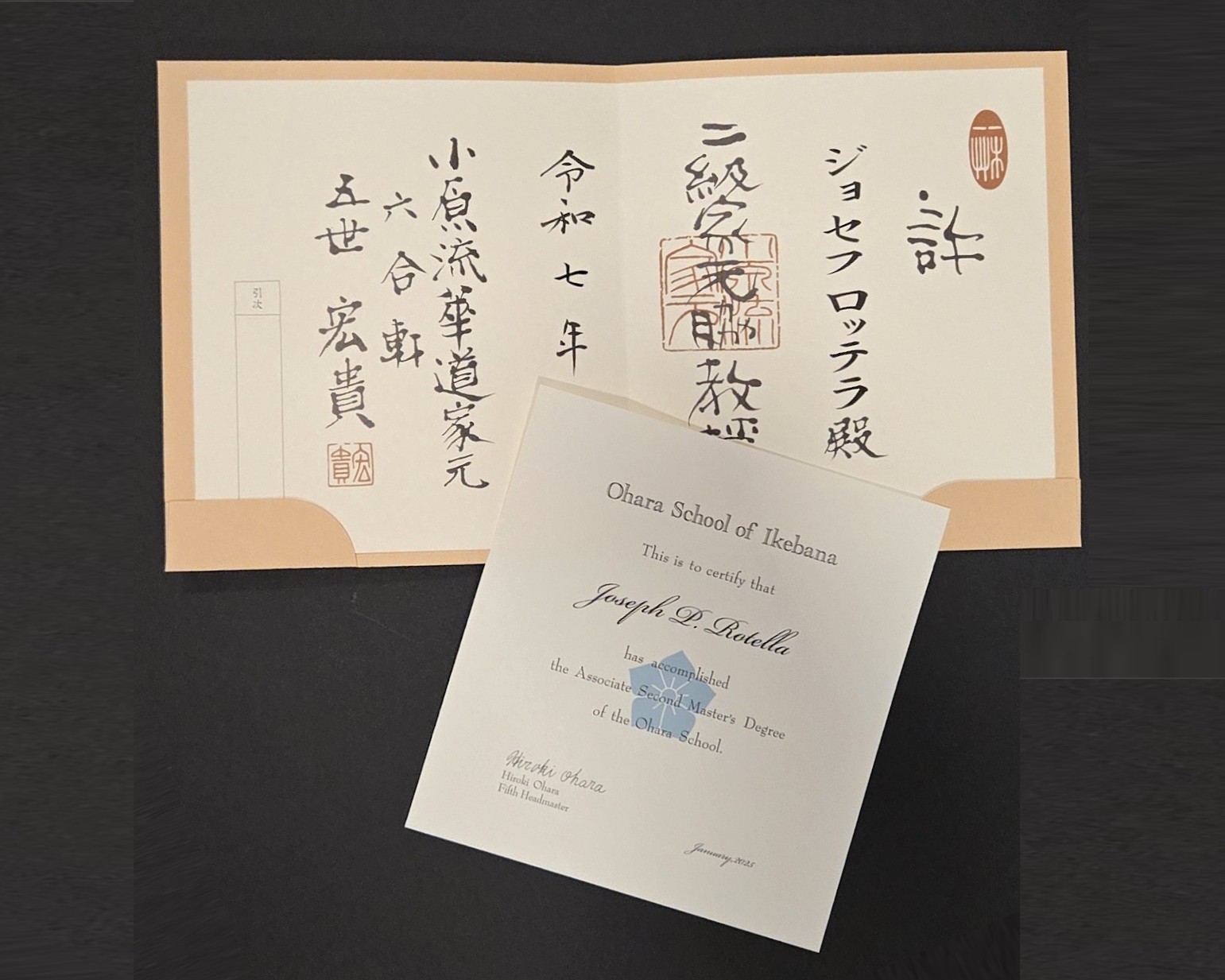
Students pursue certificates for many reasons, and there is no single correct motivation.
Some value the structure that certificates provide within a long and open-ended practice. Others appreciate having their study formally acknowledged and recorded. Some find motivation in clear milestones, while others see certificates as a way to stay connected to the broader Ohara curriculum over time.
Certificates can also help students pace themselves. Because they involve application, review, and approval, they encourage reflection rather than rushing ahead.
Teaching is one possible outcome of certificate study, but it is not the only reason certificates matter. While an Instructor’s Certificate or higher is required to teach privately or on behalf of a Chapter or Study Group, many students pursue certificates simply to support thoughtful, long-term learning.
Certificates help students orient themselves within the Ohara curriculum, not rush through it.
Because certificates are formal acknowledgments of study, the process is intentional and measured.
In general:
This process ensures that certificates are meaningful and not automatic.
The table above shows points in a student’s study when certificate applications are submitted within the Ohara School curriculum. It is intended as a guide, not a schedule.
Students progress at different paces depending on access to instruction, life circumstances, and personal goals. Some move steadily forward. Others pause for long periods. Many do both over the course of their study.
The purpose of this structure is orientation. It helps students understand where they are in relation to the broader curriculum without creating pressure or comparison.
Certificates are optional.
Some students pursue them regularly. Others wait years between applications. Some choose not to pursue certificates at all. All of these paths are valid.
Ikebana study is cumulative and personal. Certificates simply offer one way to acknowledge stages of understanding along that path.
Certificates are markers along the path, not destinations.
Over time, I have come to see certificates not as destinations, but as markers. They acknowledge moments when understanding has settled and new questions can emerge.
Certificates do not define a student. They support, reflection, and growth.
For many, that quiet recognition is meaningful.
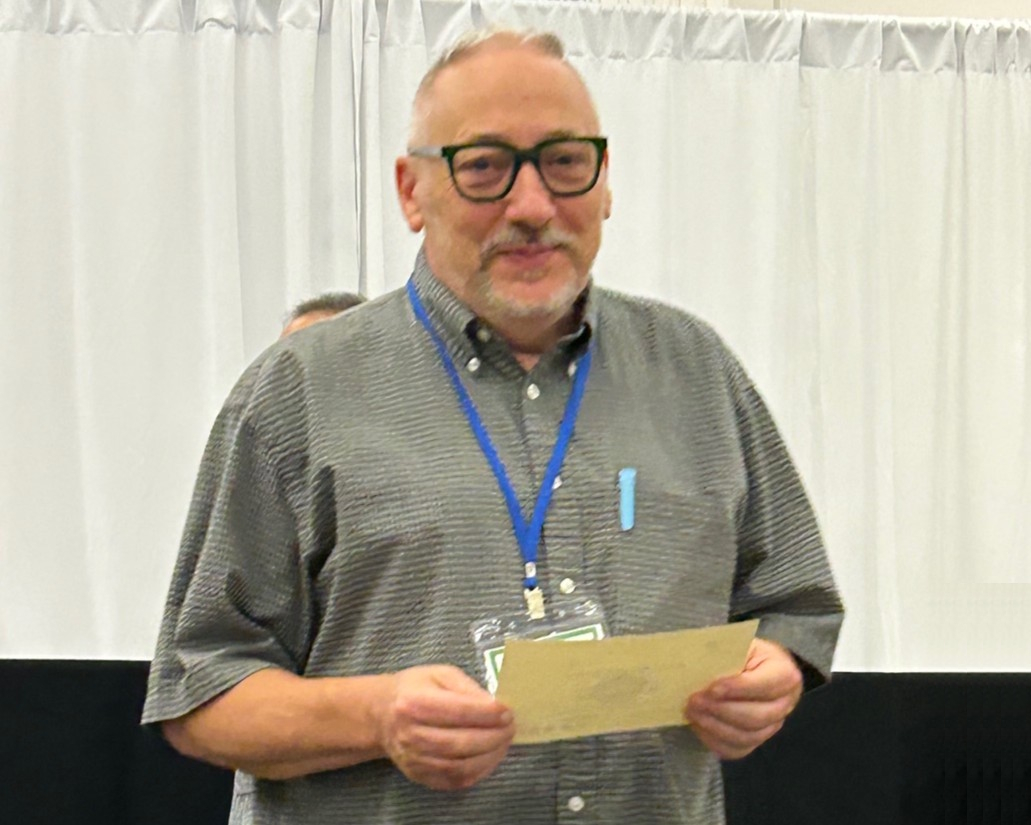
Joe Rotella
Associate Second Term Master
Ohara School of Ikebana
Whether you live in Central Ohio or across the world, you can be part of our Ohara ikebana community. Annual membership is just $24 and includes four online lectures each year (a $60 value), available live or on demand.
Become a Member →Near Columbus? Join us in person for beginner-friendly Ohara ikebana classes.
View Columbus Classes →


