0


Your Cart


Product title goes here
$19.95
Thank you! Your submission has been received!
Oops! Something went wrong while submitting the form.
No items found.
Modern Ohara ikebana did not begin with doctrine. It began with experiment, instability, and artistic conviction.
In this seminar, we explore the human story of Ohara Unshin—before moribana became inevitable—and the cultural forces that shaped the birth of the Ohara School.
This recorded lecture focuses on history, cultural context, and institutional development rather than arrangement instruction.
An apple that cost ten sen.
A young sculptor struggling to establish himself.
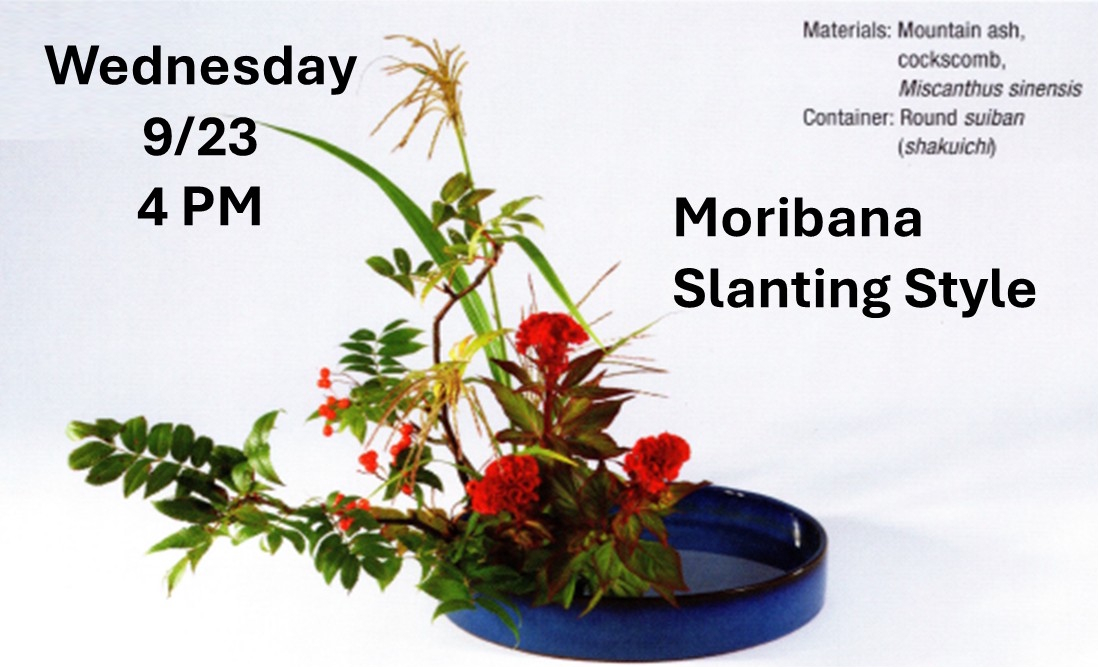
A shallow white basin that changed how flowers could be seen.
A household that rose, declined, and adapted.
The early history of the Ohara School is not a polished institutional narrative—it is a story of instability, improvisation, and artistic conviction.
In this 38 minute lecture, we step into Meiji-era Japan and explore the world that shaped Fusagorō before he became Ohara Unshin.
We examine:
The pottery family he was born into
Adoption as a practical family strategy
The financial decline that reshaped his life
His early career as a sculptor recognized at the highest levels
The hardship years in Osaka
The arrival of Western flowers and imported fruit
Experimental gatherings that preceded public recognition
Why “moribana” was not even its original name
Rather than repeating a list of dates, this lecture reconstructs the atmosphere of change: industrial Osaka, new materials, shifting aesthetics, and an artist searching for form.
Moribana did not emerge fully formed. It was tested, debated, improvised, and gradually clarified.
By the end of this seminar, we see the founder not as a distant symbol, but as a working artist navigating modernity.
The story continues in:
After the Revolution: Succession, Conflict, and the Survival of the Ohara School
Where we examine how a fragile experiment became an enduring lineage—and how the school navigated resistance, succession, and generational change.
This seminar may be attended independently.