0


Your Cart


Product title goes here
$19.95
Thank you! Your submission has been received!
Oops! Something went wrong while submitting the form.
No items found.
In Japan, October is chrysanthemum season. Known as the “imperial flower,” chrysanthemums symbolize longevity and renewal. In Ikebana, they offer endless possibilities—along with practical care tips for arranging them.
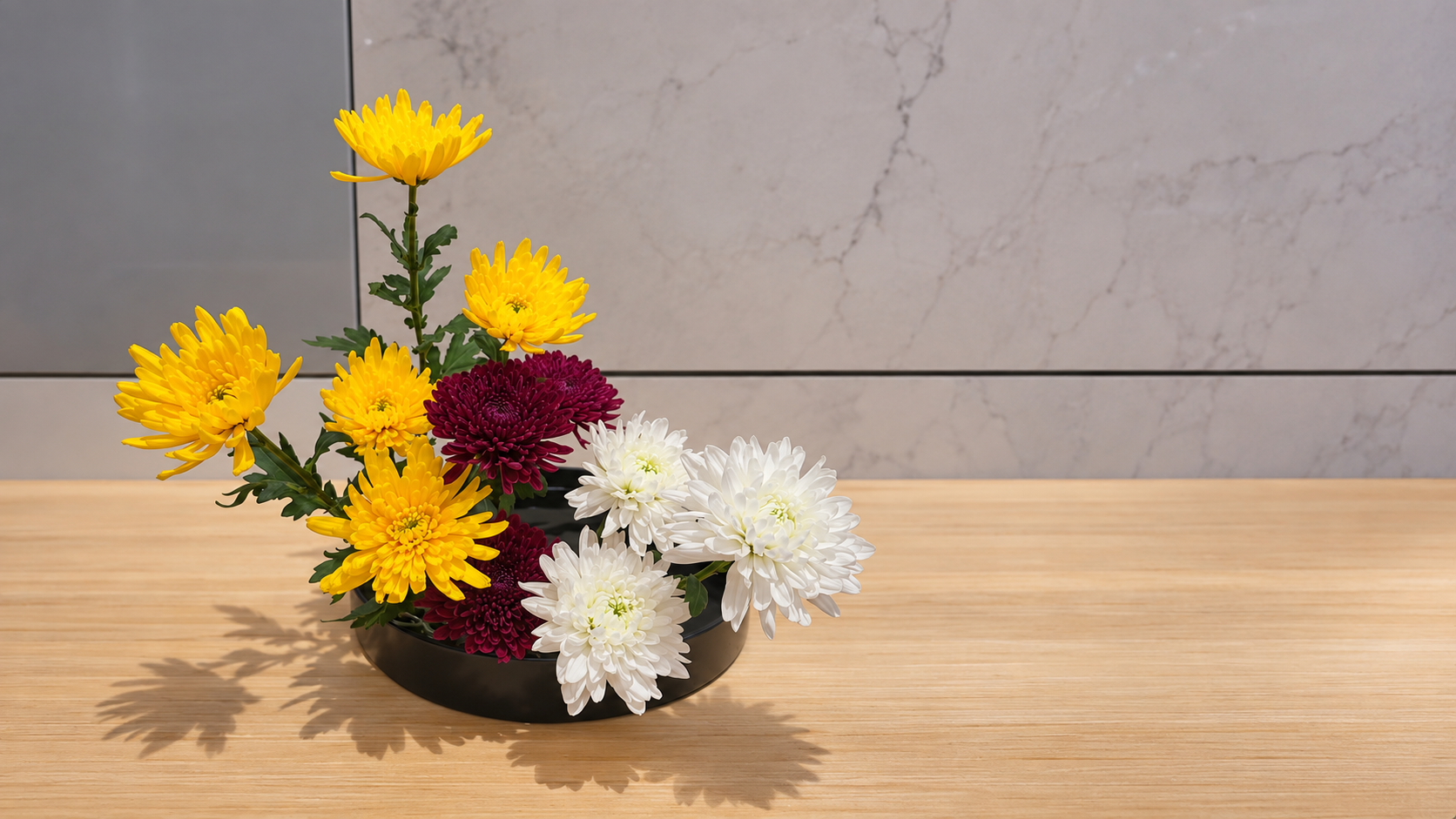
Every autumn in Japan, chrysanthemums (kiku) take center stage. October marks the height of the season, with exhibitions across the country displaying thousands of blooms in every shape, size, and color.
The chrysanthemum is more than just a seasonal favorite—it is Japan’s imperial flower, long associated with the Emperor and the Imperial family. The 16-petal chrysanthemum crest, still used today, is one of the nation’s most recognizable symbols. For centuries, kiku has represented longevity, rejuvenation, and the beauty of autumn.
In Ikebana, chrysanthemums hold a special place. Their strong stems, varied forms, and rich colors make them versatile materials. They can serve as focal points in a formal arrangement or blend naturally into Ohara School’s seasonal designs, where they harmonize with grasses, branches, and late-blooming wildflowers.
One of the joys of chrysanthemums is their variety. A single Fuji mum can become the highlight of a minimalist design, while Cremons add weight and focus to more formal styles. Pompons provide rhythm and texture, filling in spaces with charm.
Arrangements like this highlight the contrast between disbudded focal flowers and lighter, airier forms—perfect for exploring balance in Ohara Heika or Moribana.
This style shows how chrysanthemums of different colors and forms can be harmonized, creating rhythm and depth within a seasonal landscape.
If you visit Japan in October, you’ll find chrysanthemum exhibitions in parks, temples, and gardens—sometimes featuring giant blooms taller than a person. These events remind us that chrysanthemums are not only decorative, but also cultural treasures.
Here in Ohio, we can share in that tradition by celebrating the chrysanthemum in our own Ikebana. Whether arranged as a single blossom to highlight its perfection, or combined with grasses and branches to evoke the spirit of autumn, chrysanthemums remind us of the resilience and renewal found in the season.
Joe Rotella
Associate Second Term Master
Ohara School of Ikebana


