0


Your Cart


Product title goes here
$19.95
Thank you! Your submission has been received!
Oops! Something went wrong while submitting the form.
No items found.
What an immersion-style Japanese language class taught me about uncertainty, learning by doing, and why ikebana practice often makes sense only after the fact.
.png)
This year, I started taking a Japanese language class at Ohio State. I expected something familiar. Vocabulary lists. Verb conjugations. Grammar rules neatly explained before being asked to speak.
Instead, on the first day, we were dropped into role-play scenarios.
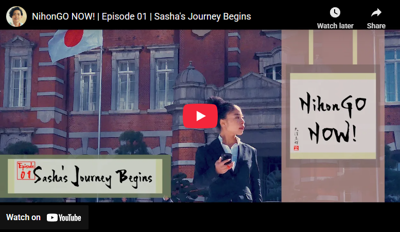
The instructors were very clear: you will not understand everything that is said to you. That’s normal. Real people do not adjust their language to match your lesson plan. Your job is not to understand every word, but to stay in the conversation.
I found this deeply uncomfortable.
When I studied French decades ago, learning was structured and sequential. You learned the rules first, practiced carefully constructed sentences, and only then tried to speak. This Japanese class flipped that model entirely. Speak now. Understand later. Or maybe understand just enough.
As the weeks went on, something started to feel familiar.
This is exactly how ikebana is taught.
In ikebana, students are often asked to arrange before they fully understand what they are doing. We learn forms before we understand intention. We hear Japanese terms long before we can define them clearly. Sensei may demonstrate, make a small adjustment, or say very little at all. Explanations are partial. Understanding unfolds slowly.
At first, this can feel unsettling. Many students worry they are missing something important, that everyone else understands more than they do. But ikebana does not reward rushing toward certainty. It asks for patience, observation, and trust.
The Japanese language class made this clear to me in a new way. You are not failing because you don’t understand everything. You are learning how to function with uncertainty. You are learning how to listen for what matters, respond appropriately, and stay present.
This approach reflects something deeply cultural. In Japanese practice, meaning often comes after experience, not before it. You do first. You reflect later. Over time, the pieces connect.
The same is true in ikebana.
If you ever find yourself thinking, “I don’t fully get this yet,” take that as a sign you are exactly where you are supposed to be. Understanding in ikebana does not arrive all at once. It accumulates quietly, season by season, arrangement by arrangement.
You are not supposed to understand everything.
You are supposed to keep practicing.
Joe Rotella
Associate Second Term Master
Ohara School of Ikebana


