0


Your Cart


Product title goes here
$19.95
Thank you! Your submission has been received!
Oops! Something went wrong while submitting the form.
No items found.
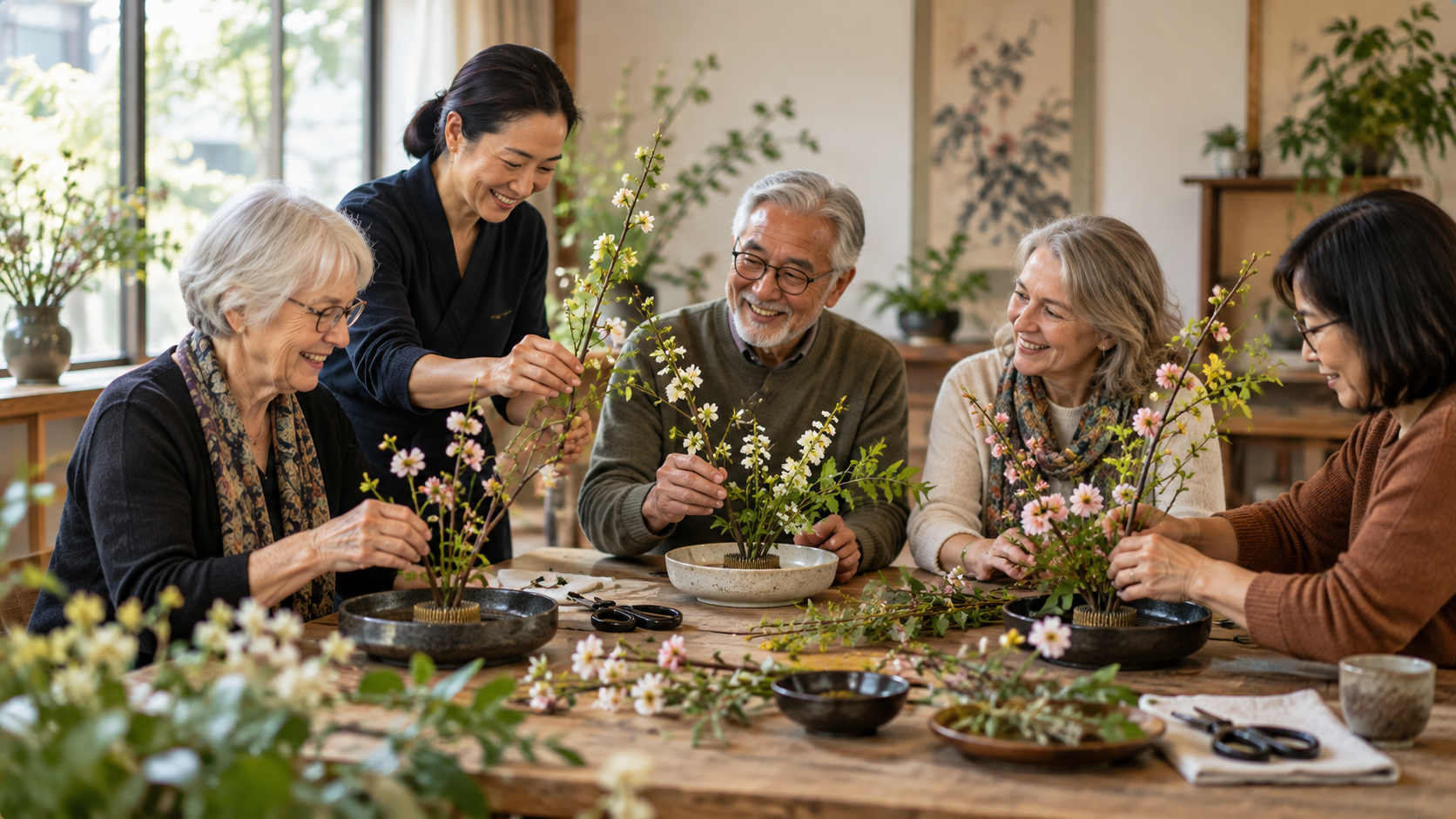
New research suggests that regularly engaging with the arts may be associated with slower biological aging. It made us wonder how the creativity, learning, social connection, and appreciation of nature found in Ikebana might contribute to a life well lived.
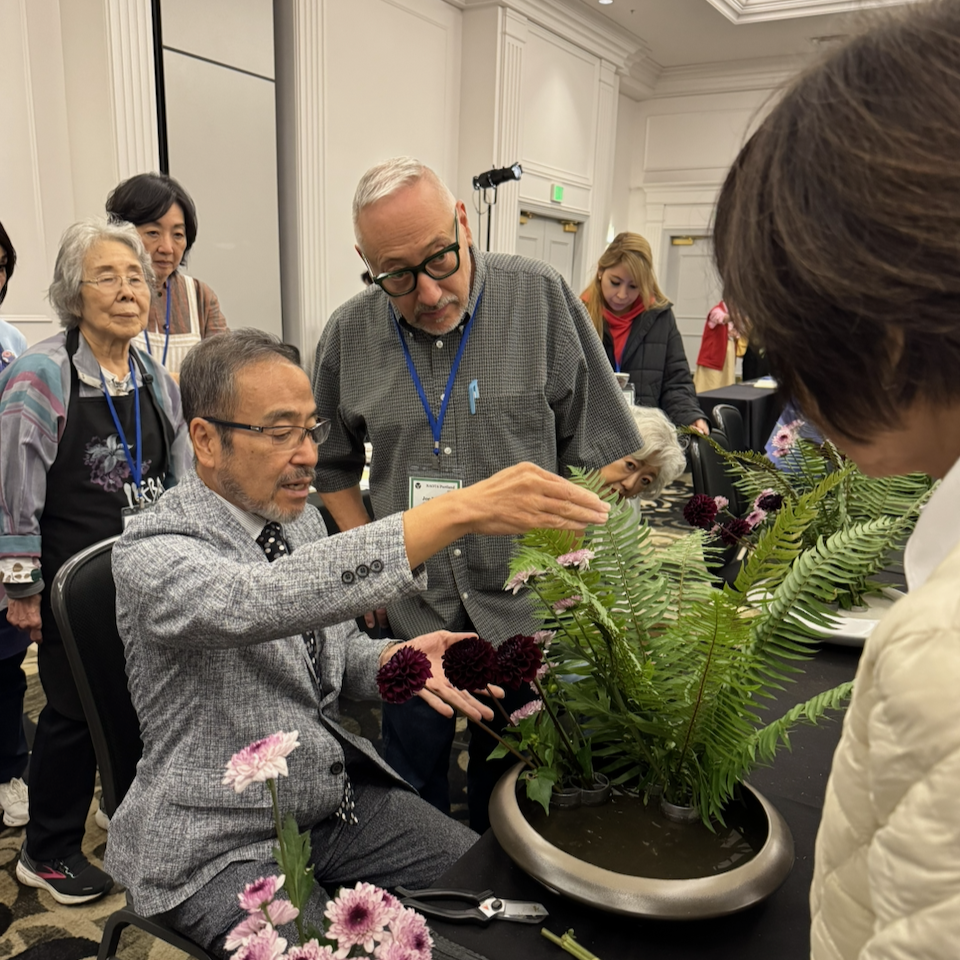
Karen, a member of our chapter from Greenville, South Carolina, whom some of you may have met at our workshops with Jose Salcedo in August, recently sent an interesting article to a group of fellow ikebanists.
Published in BBC Science Focus, “8 surprising habits that are adding years to your biological age” looks beyond familiar advice about exercise, diet, and sleep to explore some less obvious behaviors that researchers are studying in connection with healthy aging.
Karen added a wonderfully simple challenge of her own:
“Time to assemble an arrangement you have not done recently!”
Her suggestion was playful, but it raised an interesting question. Could some of the things we routinely do as students of Ikebana overlap with behaviors researchers associate with aging well?
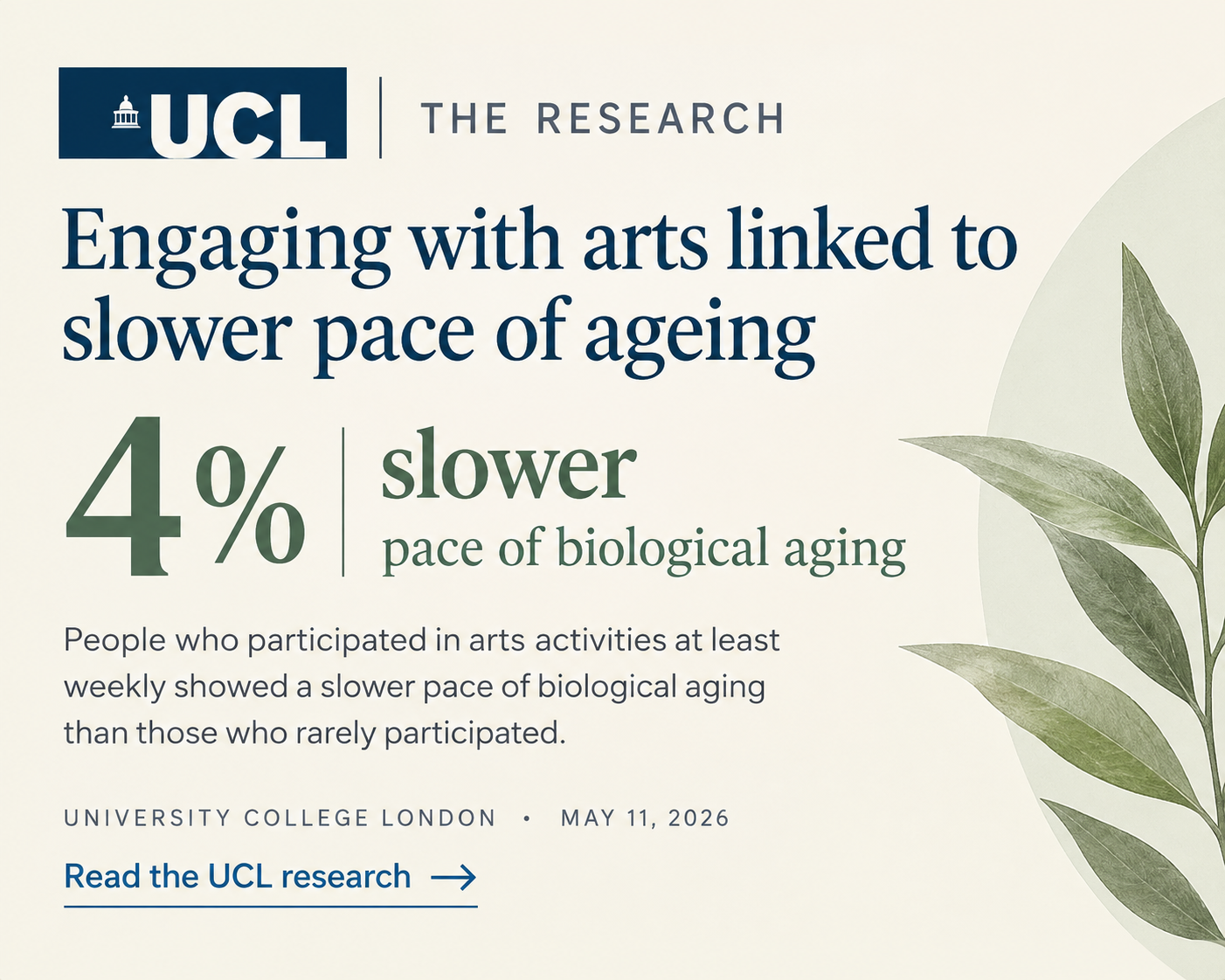
One of the most intriguing studies discussed in the article comes from researchers at University College London.
Using survey and blood-test data from 3,556 adults in the United Kingdom, researchers examined whether participation in arts and cultural activities was associated with biological aging. Rather than simply looking at participants' chronological ages, they analyzed chemical changes to DNA using several measures known as epigenetic clocks.
People who engaged with arts and cultural activities more frequently, and in a greater variety of ways, appeared to have a slower pace of biological aging on the newer measures used in the study.
Perhaps most strikingly, people who participated in an arts activity at least once a week appeared to age about 4 percent more slowly than people who rarely participated. The researchers reported that this association was comparable to the difference they observed between people who exercised at least weekly and those who did not exercise. On another measure, weekly arts participants had a biological age averaging about one year younger than people who rarely engaged with the arts.
The researchers included a broad range of activities: creating art, singing, dancing, photography and crafts, as well as attending exhibitions, visiting museums and heritage sites, reading, listening to music, and other forms of cultural participation.
Ikebana was not specifically studied, and the research does not establish that practicing an art causes us to age more slowly. But Ikebana certainly belongs in the larger world of active artistic engagement the researchers were interested in.
And that is where things become especially interesting.
Ikebana is not something we simply observe. We participate.
Every arrangement requires decisions about line, mass, color, space, proportion, balance, and the individual character of our materials. Even when working within an established Hana-isho or Hana-kei, two students given exactly the same materials will rarely produce identical arrangements.
Professor Daisy Fancourt, the lead researcher in the UCL study, suggests that the potential benefits of arts engagement may come from a combination of physical, cognitive, emotional, and social stimulation. The researchers also found that engaging with a greater variety of arts activities was associated with stronger effects.
For an Ikebana student, variety is built into the practice.
We change materials. We change containers. We study different arrangement styles. We encounter unfamiliar flowers and branches. We work with materials that bend easily and others that stubbornly refuse to do what we had planned.
And sometimes, as Karen suggested, we return to an arrangement we haven't made for a while and discover that we see it differently now.
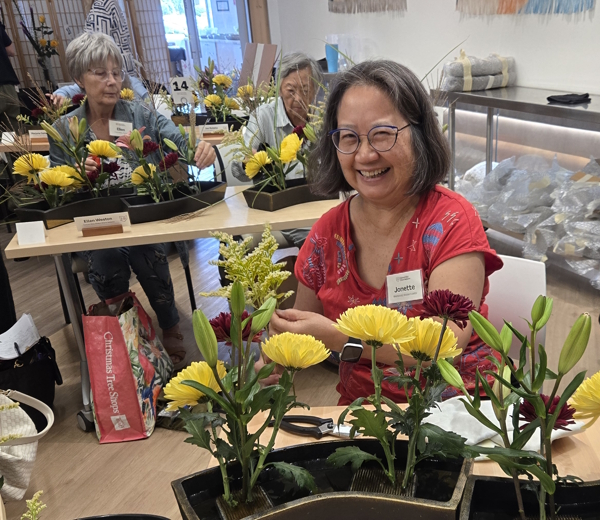
There really isn't a point at which an Ikebana student finishes learning Ikebana.
As students of the Ohara School, we begin with fundamental forms and techniques and gradually encounter increasingly complex expressions. Even arrangements we learned years ago can reveal something new when we return to them with more experience.
We learn how to manipulate branches without breaking them. We study the characteristics of unfamiliar plant materials. We consider how plants grow in nature. We learn about seasonality, Japanese aesthetics, history, containers, mechanics, and the relationships among materials.
Sometimes we learn because our teacher explains something to us.
Sometimes we learn because a branch absolutely refuses to cooperate.
Both count.
That continued learning seems particularly relevant to another idea raised in the BBC Science Focus article: remaining curious, active, socially connected, and oriented toward the future. Researchers studying how people perceive their own age have found associations between feeling younger and better health outcomes. The article emphasizes that this isn't simply a matter of pretending to be young. Rather, curiosity, engagement, and continuing to look forward may influence the behaviors that support healthy aging.
Ikebana gives us an almost endless supply of things still to learn.
The Science Focus article also highlights the substantial body of research connecting strong social relationships with health and longevity.
Anyone who has attended one of our classes knows that Ikebana can be surprisingly social for an art that often appears quiet and contemplative.
We arrange together. We ask questions. We admire someone's unusual material. We help each other wrestle an enormous branch into a container. We share cuttings from our gardens. We travel to workshops and demonstrations. We eat together. And, over time, classmates often become friends.
Our Ohara community extends far beyond a single classroom, too. Workshops and conferences reconnect us with people we may see only occasionally, while teachers and students form relationships that can continue for decades.
The arrangement may be individual, but the practice doesn't have to be solitary.
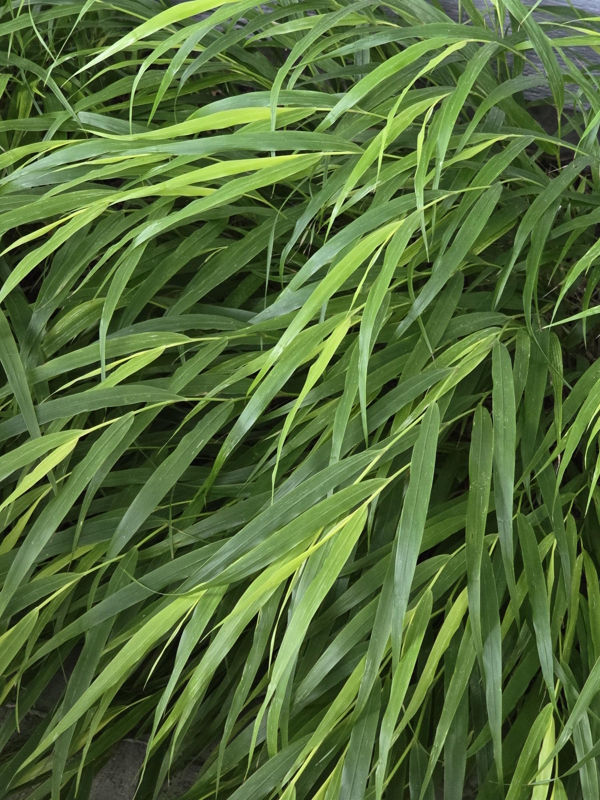
For students of the Ohara School, there is another dimension that isn't captured simply by calling Ikebana an “arts activity.”
We learn to look.
In a 2025 issue of Ikebana Ohara-ryū Sōka, readers were taken into the natural landscape around Aso to observe wildflowers where they actually grow. The lesson was not merely about identifying plants. It was about noticing their forms, their surroundings, and the conditions that shaped them.
Associate Professor Miyahara explained that growing and studying plants depeens our understanding of how they live in nature, knowledge that becomes valuable when we arrange them.
That idea appears again and again in Ohara School teaching: understanding a plant begins with observing it.
A later Sōka feature followed the Headmaster to the mountains to learn about Urahaku mountain fern directly from those who harvest it. The experience demonstrated how much can be learned from seeing where a material grows, how it is gathered, and how it behaves before it ever reaches the arranger's hands.
This kind of observation changes an ordinary walk through the garden.
We begin noticing which direction a branch is growing. We see the curve of a stem, the underside of a leaf, the progression of a bud into a flower and then into seed. We become more aware of what is emerging, blooming, fading, or disappearing as one season gives way to another.
Ikebana gives us a reason to keep paying attention.
There may be one more benefit that is harder to measure but easy for an Ikebana student to recognize.
There is always another arrangement ahead.
Another lesson. Another season. Another workshop. Another material we have never used. Another technique we haven't mastered. Another teacher from whom we can learn.
Spring brings flowering branches. Summer offers grasses and lush foliage. Autumn gives us berries, seedpods, and changing leaves. Winter reveals lines and structures that were hidden during the growing season.
Practicing Ikebana makes the passage of time itself interesting.
Spring brings flowering branches. Summer offers grasses and lush foliage. Autumn gives us berries, seedpods, and changing leaves. Winter reveals lines and structures that were hidden during the growing season.
Instead of simply lamenting that summer is ending, an arranger might think, “Soon the beautyberry will be ready.”
There is something rather wonderful about that.
We can't say that arranging flowers will make us live longer, and we shouldn't.
The research doesn't demonstrate that.
Nor can Ikebana replace exercise, good nutrition, adequate sleep, medical care, or the many other factors known to influence our health.
But the emerging research on arts participation gives us something worth considering.
Ikebana asks us to keep learning. It engages us creatively. It brings us together with other people. It gives us new things to anticipate. And perhaps most characteristically, it continually asks us to stop and pay attention to the living world around us.
Those are worthwhile things at any age.
So Karen's suggestion may have been better advice than she realized.
Maybe it really is time to arrange something you haven't done recently.
Amy Fleming, “8 surprising habits that are adding years to your biological age,” BBC Science Focus, August 27, 2026.
University College London, “Engaging with arts linked to slower pace of ageing,” May 11, 2026.
Joe Rotella
Associate Second Term Master
Ohara School of Ikebana